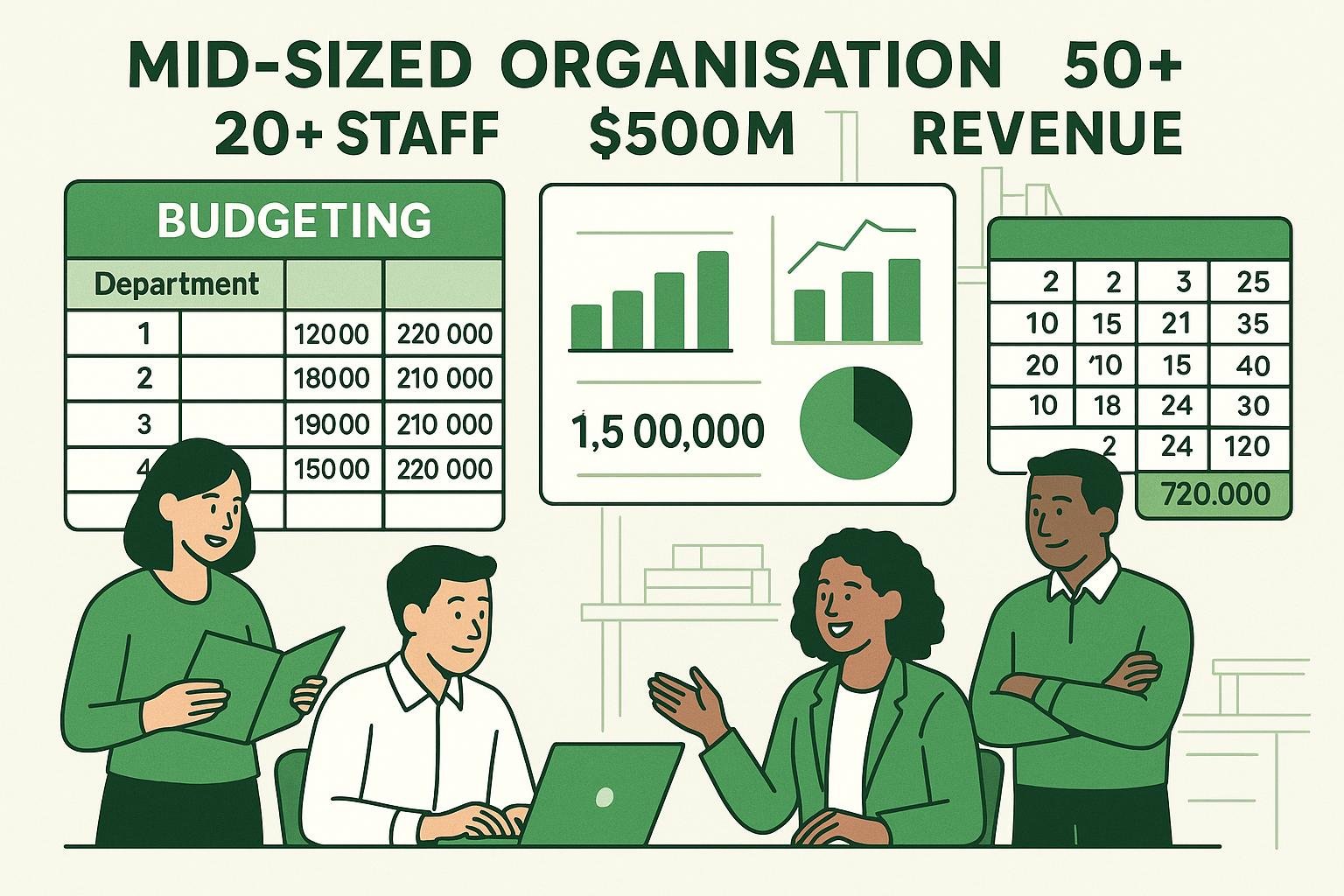
Budgyt introduces a departmental-focused budgeting solution designed to replace fragile spreadsheet models, offering enhanced transparency, role-based control, and board-ready reporting for organisations with 20+ staff and up to $500m revenue.
Budgyt presents itself as a middle-ground budgeting platform aimed at organisations that find spreadsheet-based processes increasingly brittle but do not need full-scale enterprise planning systems. The company said its software i...
Continue Reading This Article
Enjoy this article as well as all of our content, including reports, news, tips and more.
By registering or signing into your SRM Today account, you agree to SRM Today's Terms of Use and consent to the processing of your personal information as described in our Privacy Policy.
s intended for entities with roughly 20 or more staff, multiple departments and formal board oversight, and that it replaces sprawling workbook models that can contain “8,000+” roll‑up formulas and complex permission workarounds.
According to the announcement, the product centres on a department‑oriented architecture with built‑in consolidation logic, multi‑user collaboration and granular, role‑based permissions designed to limit access to sensitive payroll and line‑item detail while still producing board‑ready reports. Budgyt positioned this approach as a cost‑conscious alternative to larger FP&A suites, targeted at for‑profit organisations with annual revenues between $10m and $500m and nonprofits with $1.5m or more in annual expenses. The firm said it does not pursue use cases such as automated SaaS forecasting, manufacturing planning or construction project modelling.
Independent user feedback cited by the company supports parts of its positioning. Reviews on G2 describe the product as straightforward to adopt and useful for coordinating budgets across multiple departments. TrustRadius reviewers emphasise transparency and a positive implementation experience, and Capterra ratings reflect strong scores for usability and perceived value. Collectively, these platforms feature recurring user comments that the package improves visibility and reduces reliance on fragile spreadsheet processes.
The product’s genesis is presented as practitioner‑led: the company said a former finance vice‑president developed the platform after encountering governance and versioning failures during board reporting. That provenance is used to explain the emphasis on controlled transparency, role separation and built‑in roll‑ups intended to limit manual reconciliation and emailed file versions.
Market observers may note trade‑offs in Budgyt’s positioning. By focusing on structural budgeting rather than broader forecasting automation or industry‑specific modelling, the platform aims to simplify deployment and avoid the overhead associated with enterprise systems. However, organisations seeking advanced predictive analytics, heavy integration with operational planning or detailed project cost modelling may find those needs fall outside its stated scope.
The company’s messaging frames Budgyt as a way to mitigate operational exposure associated with complex spreadsheet networks and to provide a clearer audit trail for board review. User reviews on major third‑party sites cited by the announcement generally corroborate improvements in usability and reporting, though buyers should assess functional fit against specific forecasting, manufacturing or project‑level requirements before committing.
Source: Noah Wire Services