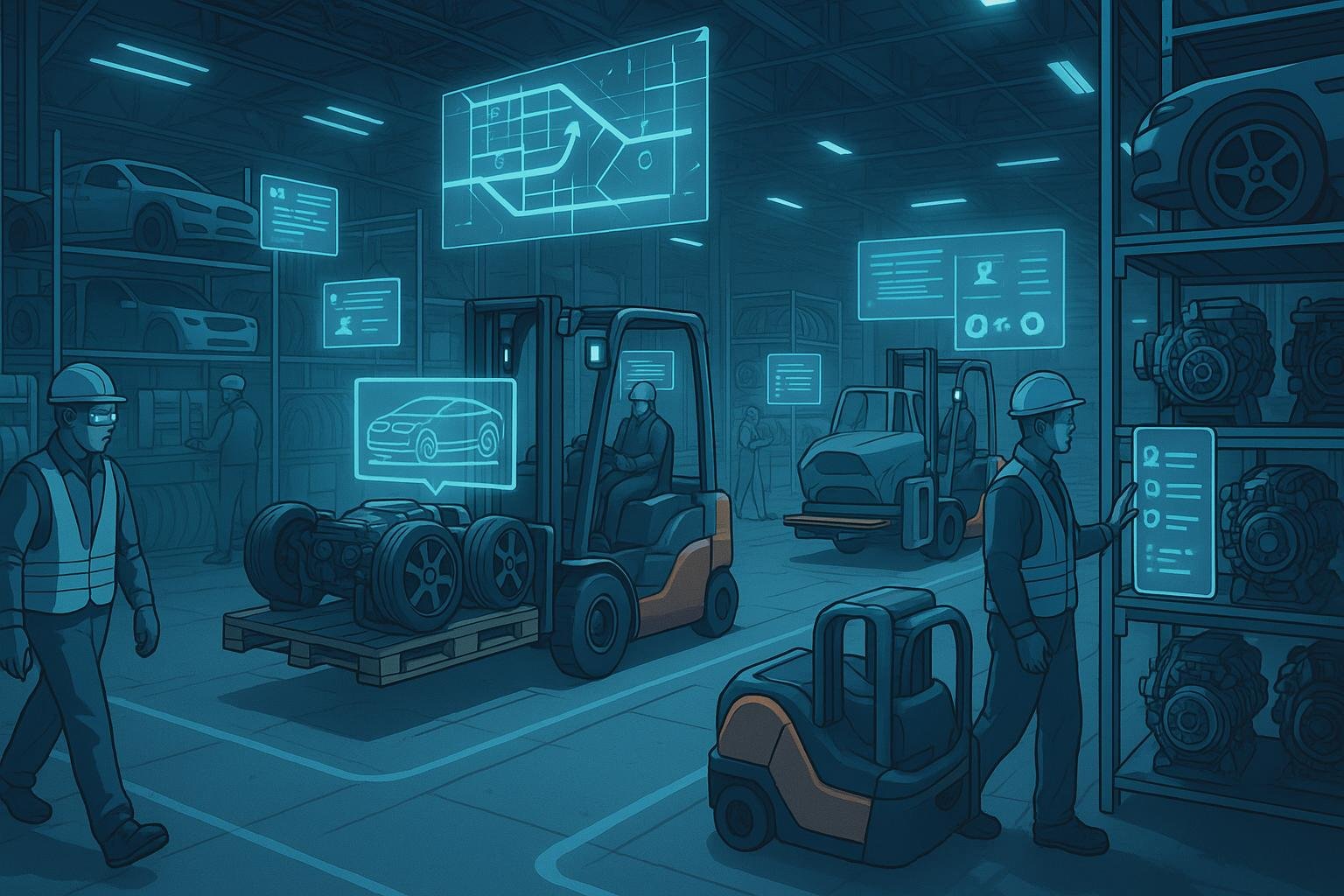
Advancements in AI, IoT, blockchain, and cloud platforms are revolutionising the automotive supply chain, driving faster, more reliable deliveries amid industry shifts and electrification trends.

Technology is remoulding how cars and components move from factory to customer, accelerating visibility, cutting costs and reshaping risk management across the automotive logistics chain. According to a contributed piece published by Supply Chain Game Changer on February 4, 202...
Continue Reading This Article
Enjoy this article as well as all of our content, including reports, news, tips and more.
By registering or signing into your SRM Today account, you agree to SRM Today's Terms of Use and consent to the processing of your personal information as described in our Privacy Policy.
At the operational level, warehouse management systems and transportation management systems have become central to orchestration, automating routine work and freeing staff to focus on exceptions and strategy. The article notes that cloud-based solutions deliver the scalability that traditional on-premise systems lack, enabling firms to flex capacity for seasonal demand and to give drivers and warehouse operators real-time updates wherever they are.
Sensors and predictive analytics are lowering downtime and improving fleet reliability. Internet of Things technologies, including RFID and vehicle telematics, supply continuous performance data that allows maintenance teams to act before failures occur. According to a CHEP blog, IoT drives asset-level visibility across networks, while predictive maintenance and digital twins help optimise replacement cycles and reduce unexpected breakdowns.
Artificial intelligence is being applied across planning and execution. Industry reporting from Automotive Technology highlights how AI-based forecasting models now incorporate customer trends, weather and geopolitical signals to sharpen production and replenishment plans. In logistics, machine learning improves route planning by analysing traffic, fuel use and weather, producing faster, more sustainable deliveries and enabling anomaly detection that triggers rapid corrective action. Automotive Logistics reports that original equipment manufacturers and suppliers are adopting AI to manage risk and that pan‑European initiatives such as the EU InvestAI programme are accelerating implementation in mobility and manufacturing.
Blockchain and distributed ledgers are gaining traction for provenance and transparency, particularly where complex component provenance matters. Multiple industry commentaries suggest blockchain can strengthen traceability and contractual certainty across multi-party flows, though integration and standardisation remain work in progress.
Digital freight forwarding and new mobility trends are already influencing requirements. Reporting by FreightAmigo points to Volkswagen’s planned robotaxi deployments in U.S. cities beginning in 2026 as an example of how next-generation mobility will create demand for rapid, secure transport of high‑tech, time-sensitive components. That same reporting also highlights the role of digital freight platforms in connecting shippers with capacity and in meeting tighter lead-time expectations.
Adoption is not without friction. Legacy IT, organisational culture and cybersecurity risk present major obstacles. The Supply Chain Game Changer piece recommends phased rollouts, staff training and middleware bridges to enable coexistence between established systems and modern platforms. Automotive Logistics emphasises that successful AI programmes require cross-functional integration and cultural change as much as technical investment.
Several market snapshots point to rapid change: one industry analysis cited a 25% rise in electric vehicle production in 2025 and noted that AI integration has cut delivery delays by roughly 40% in some documented cases, underscoring the scale and speed of transformation facing logistics networks. According to FreightAmigo and other sector commentaries, digital twins and IoT-led monitoring are expected to underpin further efficiencies as EV volumes and mobility-as-a-service deployments expand.
Looking ahead, executives and logistics professionals face twin priorities: scale the digital capabilities that have proven value while managing the migration from legacy infrastructure and hardening cyber and data governance. The supply chain plays a strategic role in enabling automotive innovation, from electrification to autonomous mobility, and industry observers cited across recent reporting expect continued investment in AI, blockchain and cloud-based control towers to define the next phase of competitiveness.
The company claims, and industry sources confirm, that organisations prepared to combine technology adoption with process redesign and supplier collaboration will secure the greatest gains in reliability, cost and speed as automotive value chains evolve.
Source: Noah Wire Services
Subscribe to Industry Updates