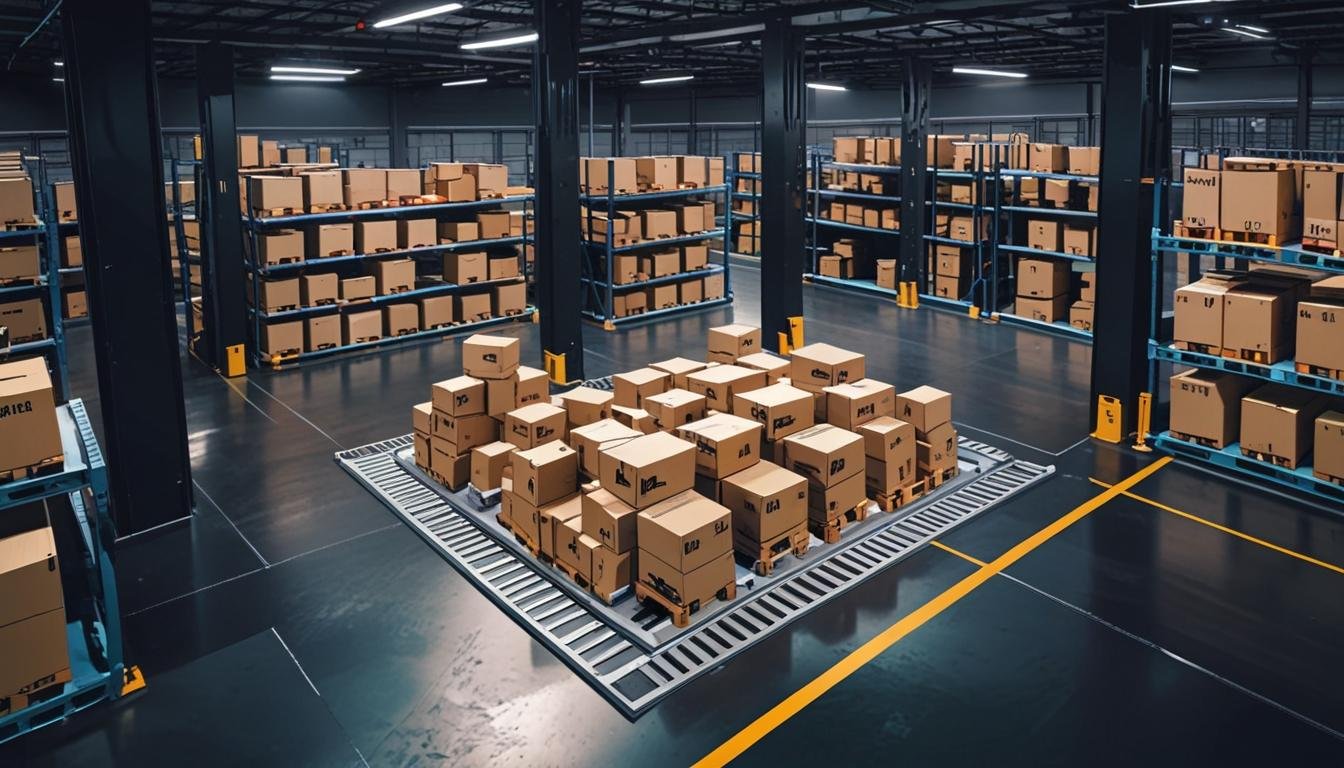
**London**: Advanced AI research is reshaping supply chains, highlighting the contrast between genuine innovations and marketing hype. Experts advocate for practical implementations of technologies like reinforcement learning and Graph Neural Networks to enhance resilience, forecasting, and risk management in logistics.
Cutting-edge research in artificial intelligence (AI) is poised to transform the future of supply chain management, a sector increasingly dominated by discussions surrounding the technology. However, a clear distinction exists between genuine innovation and what some industry leaders label as marketing noise. In a landscape filled with buzzwords like “Agentic AI” and “self-learning logistics”, executives often find themselves chasing trends without focusing on the substantial advancements emerging from research labs.
The discussion is echoed by experts who note the frequent disconnect between marketing-driven narratives and scientifically validated breakthroughs in AI. They stress that effective use of AI requires a practical approach, as it is not a simple solution but rather a complex enabler that depends on strategic alignment, rigorous testing, and realistic implementation.

In light of this, several groundbreaking studies have emerged from top AI conferences, highlighted for their novelty, scalability, and direct application to real-world supply chains.
One significant advancement is the introduction of reinforcement learning (RL) for adaptive supply chain optimisation by researchers including Fichera et al. With this innovative approach, supply chains can think and adapt in real-time, akin to a chess master anticipating moves. Unlike traditional static forecasting models, this RL method allows supply chain and inventory decisions to evolve based on real-time data fluctuations in demand and supply. The result is a more resilient supply chain that minimises stockouts and waste, effectively transforming inventory management.
Further advancements are found in the work of Wasi et al. with Graph Neural Networks (GNNs). Their research reframes supply chains as interconnected webs rather than linear lines, dramatically enhancing predictive capabilities. GNNs allow businesses to anticipate disruptions by modelling the dynamics of the entire supply chain, leading to a significant reduction in forecasting errors and improved anomaly detection.
In the realm of risk management, Rezki and Mansouri have developed a machine learning system that can forecast supplier risks before they manifest into problems. By evaluating historical and performance metrics of suppliers, their model provides valuable early warning signs, empowering companies to take proactive measures against potential disruptions.
Another innovative solution comes from the study of Multi-Agent Reinforcement Learning (MARL) by Krnjaic et al., which seeks to enhance warehouse efficiency. This system integrates human decision-makers and robotic automation, allowing intelligent coordination that improves picking speeds and minimizes delays.
In addition, Zhang et al. present LLMForecaster, a generative AI tool that revolutionises demand forecasting. By analysing a broader range of data—including social media trends and external news—this model is able to detect shifts in consumer demand much earlier than traditional methods, allowing companies to align supply with actual market needs effectively.
While experts paint an optimistic future, they caution that simply integrating these technologies will not create an AI-driven supply chain overnight. Extensive groundwork is necessary to ensure that organisations are ready to harness AI capabilities successfully. Strategies include enabling decentralised decision-making across the supply chain, transforming data from fragmented sources into unified streams, and aligning AI initiatives with sustainability goals to optimise logistics and minimise waste.
Collaboration among industry leaders, technicians, and researchers is highlighted as a critical component to harnessing the full potential of AI in supply chains. Advancements in technology will require pilot projects and partnerships to refine applications in real-world scenarios.
The framework for a future AI-driven supply chain suggests a transition from reactive strategies to proactive resilience, where AI capabilities will enhance human strategic leadership, allowing executives to focus on long-term goals rather than immediate crisis management. As researchers indicate, those who invest in understanding and implementing these technologies now will likely lead the market in the years ahead, while those that hesitate may find themselves struggling to catch up in an increasingly competitive landscape.
Source: Noah Wire Services