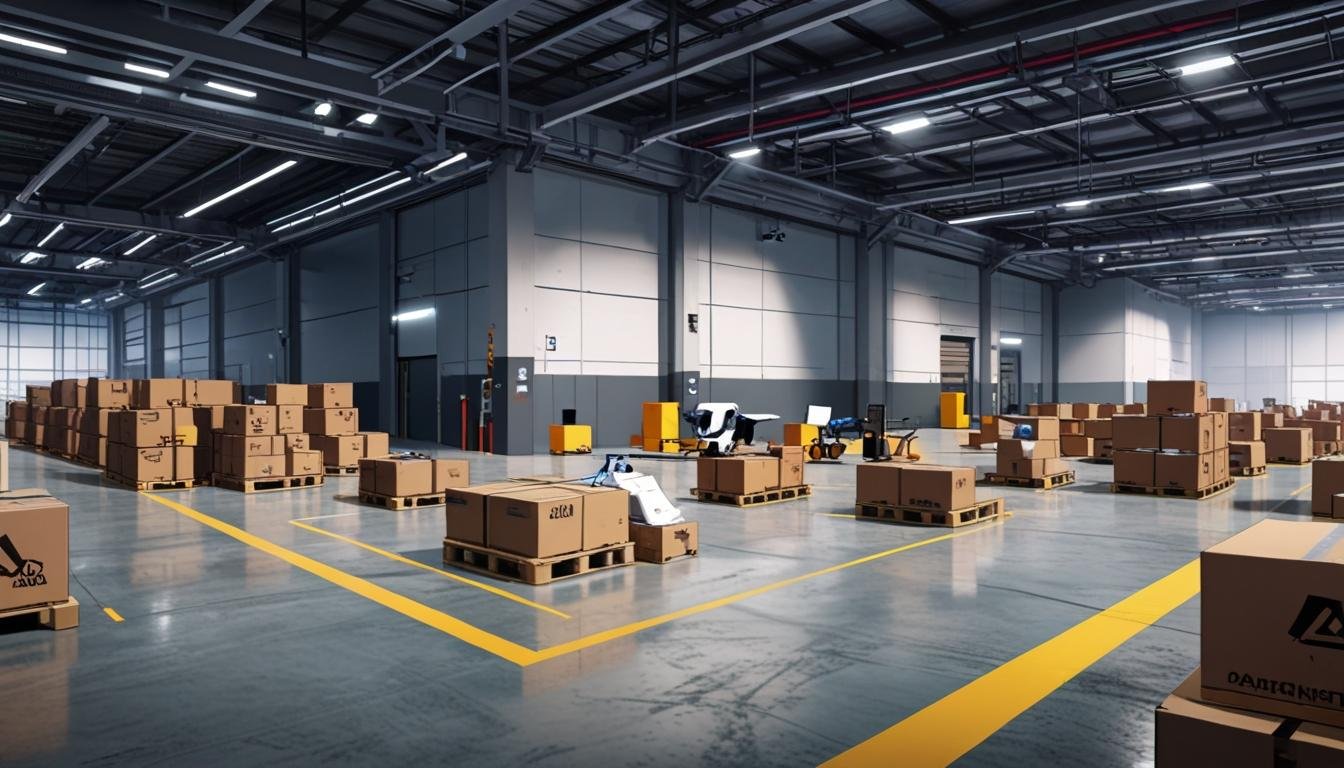
**London**: Anthony Marshall of IBM highlights the transformative role of agentic AI in supply chains, as companies report expected revenue boosts. The upcoming IBV study co-authored with Oracle explores challenges and strategies for leveraging these advanced AI agents in managing complex operations.
The supply chain landscape is undergoing a significant transformation, primarily spurred by advancements in artificial intelligence (AI). This evolution, particularly in the form of agentic AI, was the focus of a presentation by Anthony Marshall, Senior Research Director for Thought Leadership at the IBM Institute for Business Value (IBV), during the Oracle Cloud World Tour held in March. His insights were drawn from the early findings of a comprehensive study on AI’s role in enhancing supply chain operations.
Marshall articulated a clear distinction between traditional AI systems and the more sophisticated agentic AI. He explained that while AI assistants typically react to user inquiries and perform tasks as instructed, agentic AI operates proactively, independently managing complex tasks and processes around the clock. “The evolution [of AI in supply chains] has moved from RPA into assistance, assistance into agents, and agents into agentic platforms,” Marshall stated. This proactive capability is underpinned by advanced cognitive functions, enabling these agents to make decisions, self-improve, and adapt in real-time to changing circumstances.

According to the initial findings of the IBV study, organisations that have made substantial investments in AI for their supply chain operations predicted an impressive revenue growth of 11.02% in 2024. This is significantly higher than the 6.83% growth anticipated by companies that have invested less in AI technologies. The study indicates that agentic AI can greatly enhance efficiency within various workflows by offering real-time, tailored responses to transactional inquiries. This has the potential to streamline supply chain management, improve the identification of bottlenecks, and foster design innovation.
Additionally, Marshall highlighted the necessity for organisations to navigate several challenges as they adopt these technologies. He identified geopolitical risks, global trade tensions, sustainability concerns, and ethical sourcing as major issues that supply chain leaders will face in 2025. Furthermore, he noted that data accuracy and privacy concerns pose significant hurdles for the implementation of generative AI in supply chain operations.
The comprehensive report, which the IBV co-authored with Oracle, is slated for release in April. The preliminary insights emphasise the transformative capabilities of agentic AI in fostering more resilient and autonomous supply chains.
In terms of practical applications, Marshall suggested that organizations must hold AI agents accountable in a manner akin to traditional employees. This includes establishing relevant metrics and monitoring key performance indicators to ensure they achieve their intended business impact. He also stressed the need for top talent to manage AI agents effectively throughout supply chain workflows.
Three primary strategies were recommended for organisations to leverage AI agents effectively. First, it is essential to develop specific AI agent personas for diverse supply chain tasks, particularly those involving global partners. Second, organisations should delineate how their AI agents will collaborate to optimise existing workflows, create new ones, and enhance personalised communication with customers and partners. Finally, Marshall urged businesses to engage with their ecosystem partners to evaluate and support each other’s progress in enhancing agentic AI capabilities.
While data presents a notable challenge for deploying AI agents, these technologies can also assist in overcoming this barrier. Organisations can use AI agents to explore data, conduct hypothetical scenario testing, and perform sensitivity analyses based on extensive proprietary data and operational experience. In doing so, AI agents can autonomously coordinate necessary actions to prepare for likely impactful scenarios. To maximise this potential, businesses are encouraged to develop mechanisms for measuring the value of AI-led disruption avoidance, setting benchmarks for ongoing improvement of agent performance.
Source: Noah Wire Services