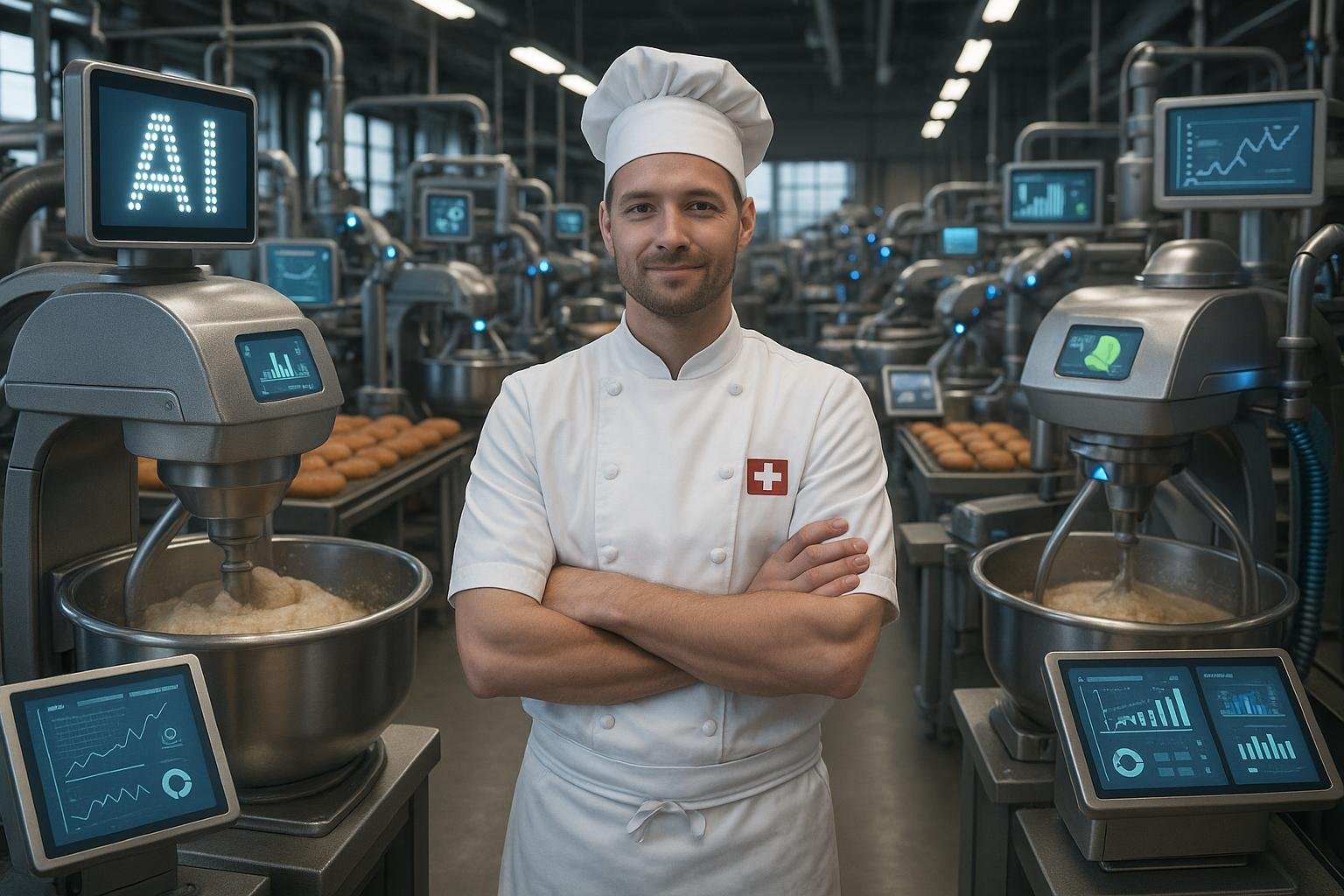
From bakery production to hospital waste management, AI’s rapid integration in Switzerland highlights both its efficiency gains and the evolving regulatory and employment landscape, emphasising responsible innovation.

The integration of Artificial Intelligence (AI) into traditional industries and public services is advancing in ways that reveal its potential to optimise operations and reduce waste while reshaping workplace dynamics. A notable example comes from Sauer, a family-run bakery in Baden-Württemberg, which has harnessed AI to revolutionise its daily production processes. Rather than relying on intuition, the bakery’s AI system evaluates more than 1,000 ordering decisions each day, using around 150 factors such as weather, day of the week, location, and product assortment to determine optimal bread and roll quantities for each outlet. This precision has significantly cut food waste and unexpectedly reduced the need for unpopular night shifts, demonstrating how technology can support workers rather than replace them in artisanal trades experiencing skilled labour shortages.
The bakery’s approach is part of a broader trend where AI is being deployed to address inefficiencies and environmental concerns in food management. For instance, the Kantonsspital Winterthur (KSW) hospital in Switzerland has employed AI from early 2024 to monitor food waste comprehensively. Using scales and cameras, the system continuously collects detailed data on discarded food items both in patient and staff cafeterias. This analysis revealed that approximately 52,000 kilograms of food were wasted over the reporting year, allowing the hospital to devise targeted strategies for waste reduction. The shared theme in these applications is AI’s ability to provide granular insights that were previously difficult to obtain through traditional methods, thereby facilitating more informed and sustainable decision-making.
On a regulatory front, the rise of AI technologies has prompted significant legislative responses, particularly within Europe. In March 2024, the European Parliament enacted a comprehensive law governing AI use, aiming to address both political and economic challenges posed by the technology’s rapid development. This legislation emphasises regulating the applications of AI, focusing on transparency, safety, and ethical deployment. Swiss experts, including Professor Sarah Dégallier Rochat, have highlighted the importance of harmonising Swiss AI policies with these European standards to ensure clear legal frameworks and compliance. This is particularly relevant as Swiss institutions and businesses increasingly integrate AI, underscoring the necessity for robust governance to navigate issues like data protection and ethical concerns.
The emergence of new AI models reflects this regulatory context as well. The Swiss-developed Apertus AI model aims to establish a high standard for trustworthy, transparent, and globally relevant open-source AI solutions. Designed in full compliance with EU copyright laws and voluntary AI codes of conduct, Apertus targets sectors such as finance, healthcare, research, and education where strict regulatory adherence is critical. By making transparency and compliance competitive advantages, Apertus offers an alternative to US-based AI models, potentially setting a precedent for responsible AI development in Europe.
While AI’s benefits in operational efficiency and compliance are clear, its impact on the labour market presents a more complex picture. Research from Harvard University reveals that the adoption of generative AI technologies is altering employment patterns, especially for junior-level positions in the United States. Since early 2023, hiring for junior roles in AI companies has dropped by 22%, despite no corresponding rise in layoffs, suggesting a shift in recruitment focus. Senior roles continue to expand, reflecting a preference for experienced professionals who can manage and leverage AI effectively. The retail and wholesale sectors have experienced the steepest declines, as many routine tasks—such as customer service and documentation—become more readily automated. This trend raises questions about equitable workforce development and the need for upskilling to ensure that younger or less experienced workers can still contribute meaningfully in an AI-augmented economy.
Finally, the legal landscape surrounding AI-generated content remains cautiously scrutinised, especially in Switzerland. Although AI itself is not regarded as an author under Swiss copyright law, the code and content produced by AI systems can inadvertently reproduce copyrighted materials contained in training data, posing legal risks. Developers are advised to meticulously review AI-generated code to avoid incorporating protected or license-restricted elements that could expose them to infringement claims. This legal nuance underscores the importance of vigilance and compliance as AI-generated outputs become more prevalent in commercial and creative applications.
In sum, the intersection of AI with traditional businesses, public institutions, regulatory frameworks, and labour markets illustrates a multifaceted transformation underway. From reducing food waste in bakeries and hospitals to shaping workforce composition and prompting legal reform, AI’s impact is wide-reaching. These developments highlight the potential of AI to enhance efficiency and sustainability while simultaneously challenging society to address ethical, legal, and social implications with care and foresight.
Source: Noah Wire Services