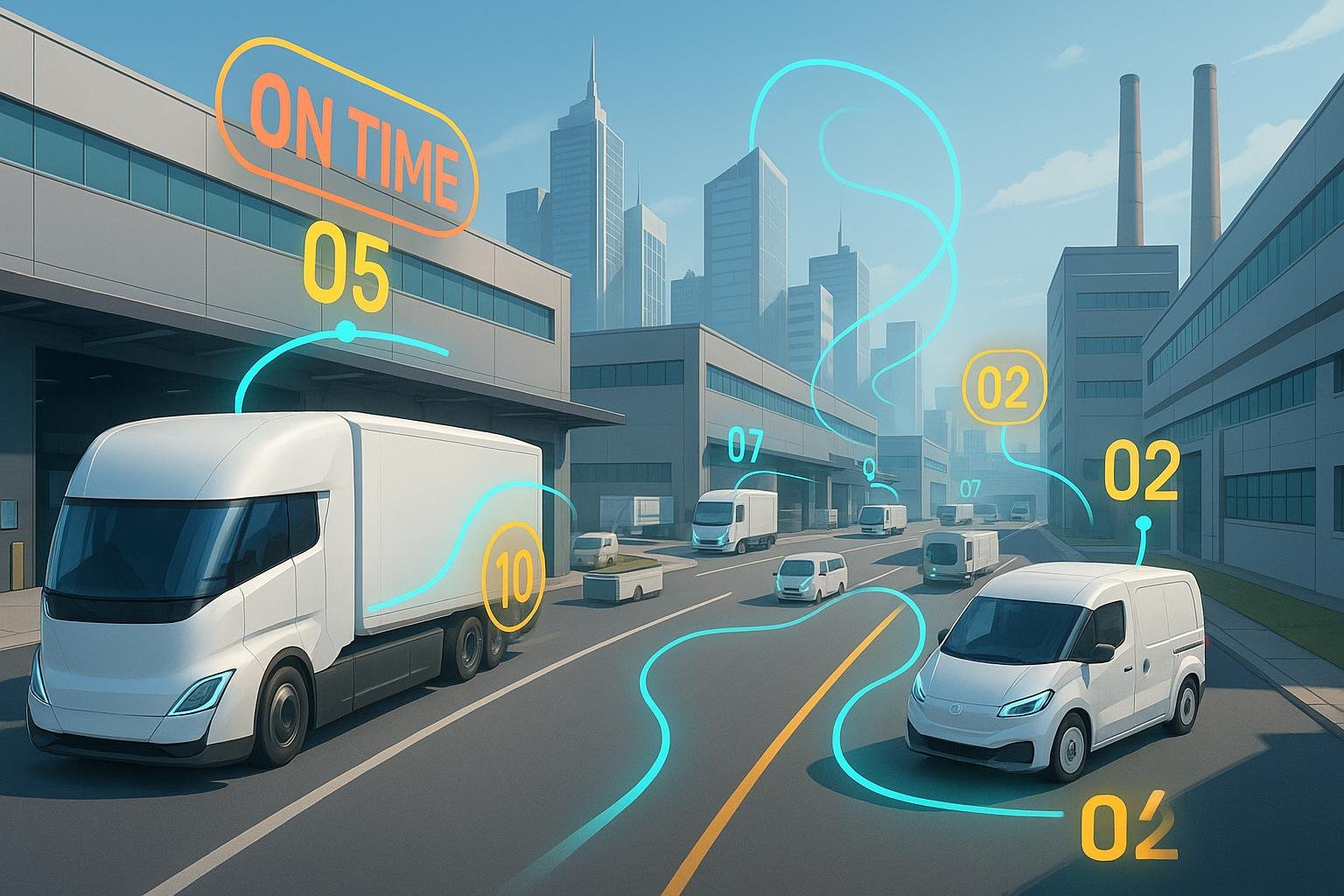
Since the pandemic destabilised long-standing distribution patterns, the logistics that undergird the food sector have become a defining battleground for manufacturers and direct-to-consumer services alike. Perishability and the rise of online grocery and subscription meal services have magnified the cost of failure: a late or mismanaged delivery can mean wasted product, customer churn and regulatory headaches.
“[There] used to be very well-defined flow paths for companies â€...
Continue Reading This Article
Enjoy this article as well as all of our content, including reports, news, tips and more.
By registering or signing into your SRM Today account, you agree to SRM Today's Terms of Use and consent to the processing of your personal information as described in our Privacy Policy.
“ moving full truck loads and predictable numbers of goods across what used to be predictable lanes and transportation networks,”said Shri Hariharan, senior vice president of solutions for Blue Yonder, an AI-powered supply chain management platform. “Now, everything is subject to change, starting with the consumer and their expectations.” His observation captures how variability at the demand end propagates complexity through routing, packaging and temperature-control requirements.
CookUnity, which delivers fresh, chef-prepared meals on a subscription basis, illustrates those operational pressures. Aalok Kapoor, the company’s chief operating officer, stressed the narrow timing window for their product, noting that deliveries “can not be late,” but they “can’t be early either.” Perishable, non-preserved food demands precise sequencing: wrong timing or insufficient cold-chain protection risks spoilage at the customer’s doorstep.
To manage those constraints, companies are turning to artificial intelligence as both a forecasting engine and an operational aide. According to industry analysis by Forbes, AI can bridge fragmented systems and accelerate decision-making across procurement, inventory and logistics, addressing chronic problems such as underused data and slow responses. CookUnity reports that machine learning has materially raised its forecasting accuracy from roughly 50–60% to about 80–90%, enabling planners to back into logistics decisions with greater confidence.
Beyond demand prediction, AI is being applied to real-time routing, temperature monitoring and collaborative load-sharing. Blue Yonder and other vendors are increasingly promoting platform features that flag route disruptions, suggest alternative carriers or pair non-competing shippers to reduce empty return trips. Food Logistics reporting highlights these route-optimisation gains as a way to cut costs and reduce spoilage risk by improving asset utilisation and shortening transit times.
Yet the literature and vendors’ claims also point to important caveats. Implementing AI in isolation risks creating new silos or producing opaque recommendations that operators distrust. TechRadar and Food Logistics both stress the necessity of embedding AI within human-centred workflows, pairing automation with oversight, clear governance and traceability. The concept of agentic AI , systems that not only analyse but act across multiple functions , promises faster responses, but requires disciplined controls to ensure coordinated and auditable decisions.
Supply-side pressures add further complexity. FoodLogistics and NobleAI analyses note that geopolitical shifts, tariff changes and ingredient shortages force manufacturers to rework formulations and sourcing maps, often at short notice. AI can help identify substitute suppliers or adapt recipes to available ingredients, turning disruption into a competitive opportunity when governed responsibly.
Practical logistics choices remain highly product-specific. For temperature-sensitive deliveries, companies must calibrate packaging and cooling strategies to route length and expected delays; heavier ice packs may be needed for longer legs, while rapid local delivery can permit lighter insulation. Continuous monitoring and rapid exception handling are therefore central: for food, unlike durable goods, “things happen on the route, which, if you’re delivering toilet paper is fine,” Kapoor observed, “If you’re delivering food, it’s a problem.”
Industry practitioners emphasise a measured approach: invest in integrated data platforms, apply AI where it augments human judgement, and develop cross-company partnerships to smooth capacity spikes. Government data and third-party logistics reports suggest the highest returns come from combining improved demand signals with better visibility and flexible transport networks.
As food companies refine their logistics playbooks, the winners will likely be those that treat AI as an operational partner subject to governance rather than as a silver bullet. When forecasting feeds temperature-aware routing, carrier contracts and supplier contingency plans, resilience becomes actionable: fewer spoiled shipments, lower costs from wasted miles, and a stronger promise to customers who increasingly expect fresh food delivered reliably to their door.
Source: Noah Wire Services