


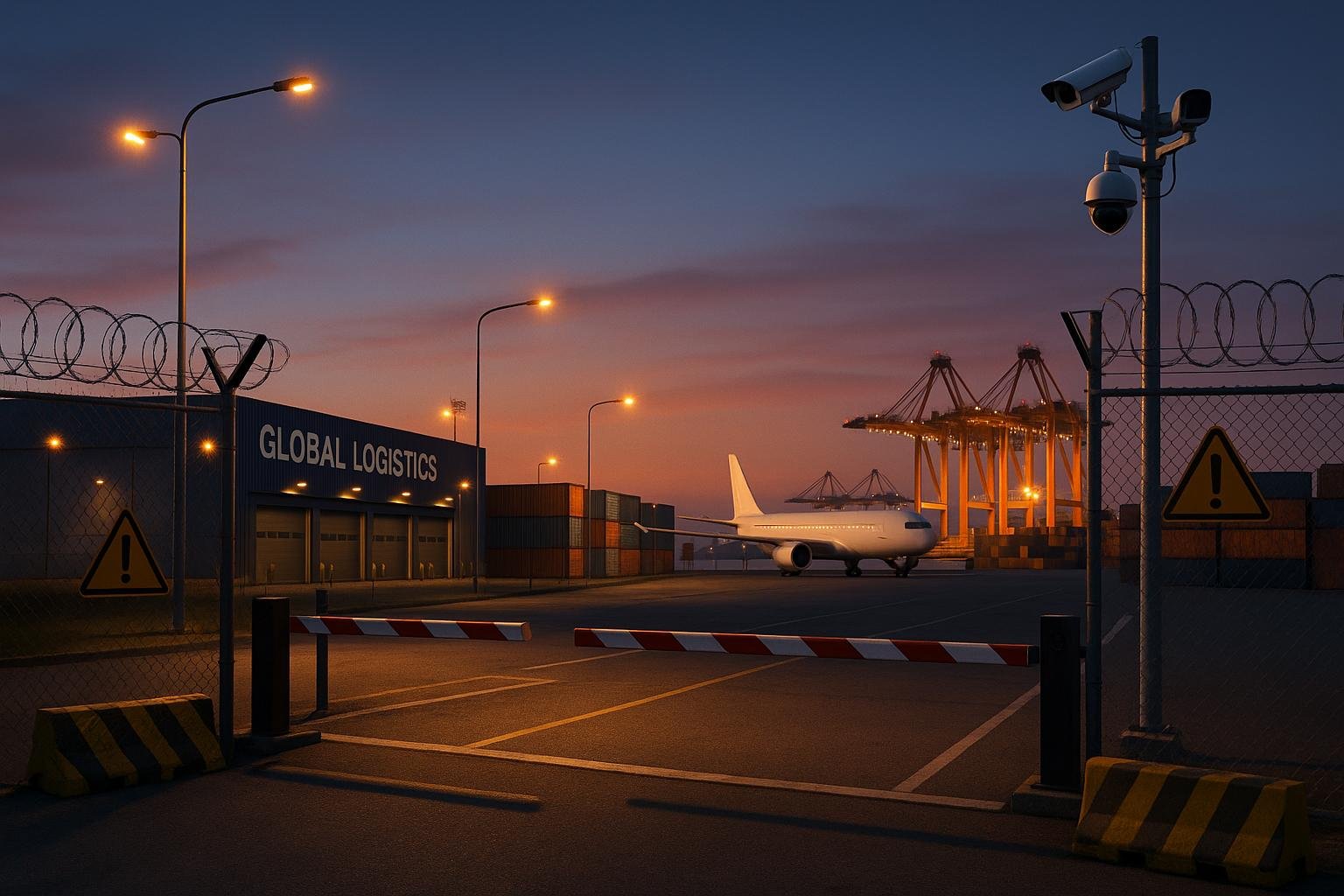
Emerging cyber threats powered by AI and ongoing geopolitical conflicts are reshaping global supply chains, demanding heightened vigilance and agile response strategies from logistics providers worldwide.

Artificial intelligence is reshaping risks for global logistics as sharply as storms or geopolitical flashpoints, according to industry and security analyses, forcing shippers and their customers to rethink how freight moves from factory to final mile.
According...
Continue Reading This Article
Enjoy this article as well as all of our content, including reports, news, tips and more.
By registering or signing into your SRM Today account, you agree to SRM Today's Terms of Use and consent to the processing of your personal information as described in our Privacy Policy.
The consequences for supply chains are acute. Logistic networks are built from interdependent legacy systems, third‑party software and widely trusted operational practices, attributes that make them especially attractive to attackers. According to CrowdStrike, adversaries have shifted away from blunt attacks on single transport links toward compromising upstream software providers and development ecosystems, exploiting that trust to insert malicious code into legitimate software distributions. The company says such supply‑chain intrusions have yielded large returns for some actors; it cites an attack attributed to North Korean operators that led to the theft of US$1.46 billion in cryptocurrency after trojanised software was delivered via a supply‑chain compromise.
AI is also changing the tactics and scale of social engineering and ransomware. CrowdStrike’s reports document a 442% jump in vishing driven by generative‑AI deception and a surge in China‑linked espionage activity, with targeting in sectors such as finance, media and manufacturing rising sharply. Its ransomware survey notes 76% of organisations say they cannot match the pace and sophistication of AI‑powered assaults, 48% identify AI‑automated attack chains as today’s greatest ransomware peril, and 85% report that traditional detection approaches are losing effectiveness.
Zero‑day vulnerabilities are increasing too. CrowdStrike’s data shows a 42% year‑on‑year rise in zero‑day exploitations in 2025 compared with 2024, heightening the window in which defenders have no patch available to stop an intrusion.
These cyber dynamics compound conventional disruptions to sea freight. Geopolitical developments in the Middle East have again distorted global maritime flows. The Strait of Hormuz , the conduit for roughly 40% of liquefied natural gas cargoes and about 40 million barrels of oil per day , has been subject to interruptions that have rippled through tanker and bulk markets and threaten energy buyers in China, India, Japan and the eurozone. At the same time, conflict and related military operations have stymied any rapid return to normal container transits through the Red Sea and Suez corridor, prolonging diversions around the Cape of Good Hope.
Ocean freight analytics firm Xeneta’s chief analyst Peter Sand warned that recent U.S.–Israel operations will “shatter hopes of a large‑scale return of container shipping to the Red Sea in 2026,” and predicted severe regional port congestion if Persian Gulf access is restricted. Drewry, the U.K. shipping consultancy, recorded a 122% month‑on‑month rise in blanked sailings in February across key tradelanes, a sign of mounting schedule instability. Diversions around the Cape have lengthened journeys and effectively absorbed roughly 2.5 million 20‑foot equivalent units of capacity, helping blunt overcapacity but increasing voyage times and costs.
Macro forecasts point to an uneven outlook. S&P Global Market Intelligence projects global trade growth slowing to about 1.7% in 2026 while fleet expansion is expected to climb by around 4.7%, an imbalance that, combined with the heightened volatility from security and political shocks, promises continued disruption and price swings.
For shippers, carriers and consignors the upshot is clear: risk profiles have widened. Cyber threats now target the software and services that underpin logistics as directly as storms or strikes threaten berths and terminals. According to CrowdStrike, the rise of AI‑assisted attacks has created a “distinct security challenge” for supply chains because attackers exploit the implicit trust users place in legitimate software and patching practices.
The combined picture demands more frequent and integrated planning. Industry analysts and security firms recommend that logistics operators update routing and contingency plans with greater cadence, harden software‑supply‑chain visibility, and accelerate detection and response capabilities to contend with attacks that move at machine speed. The interplay of faster cyberattacks, rising zero‑day exploitation and continuing maritime disruptions means resilience will be measured not only in spare box capacity or alternative routes, but in how rapidly and reliably companies can detect, isolate and remediate digital breaches while keeping physical goods moving.
Source: Noah Wire Services
Subscribe to Industry Updates

