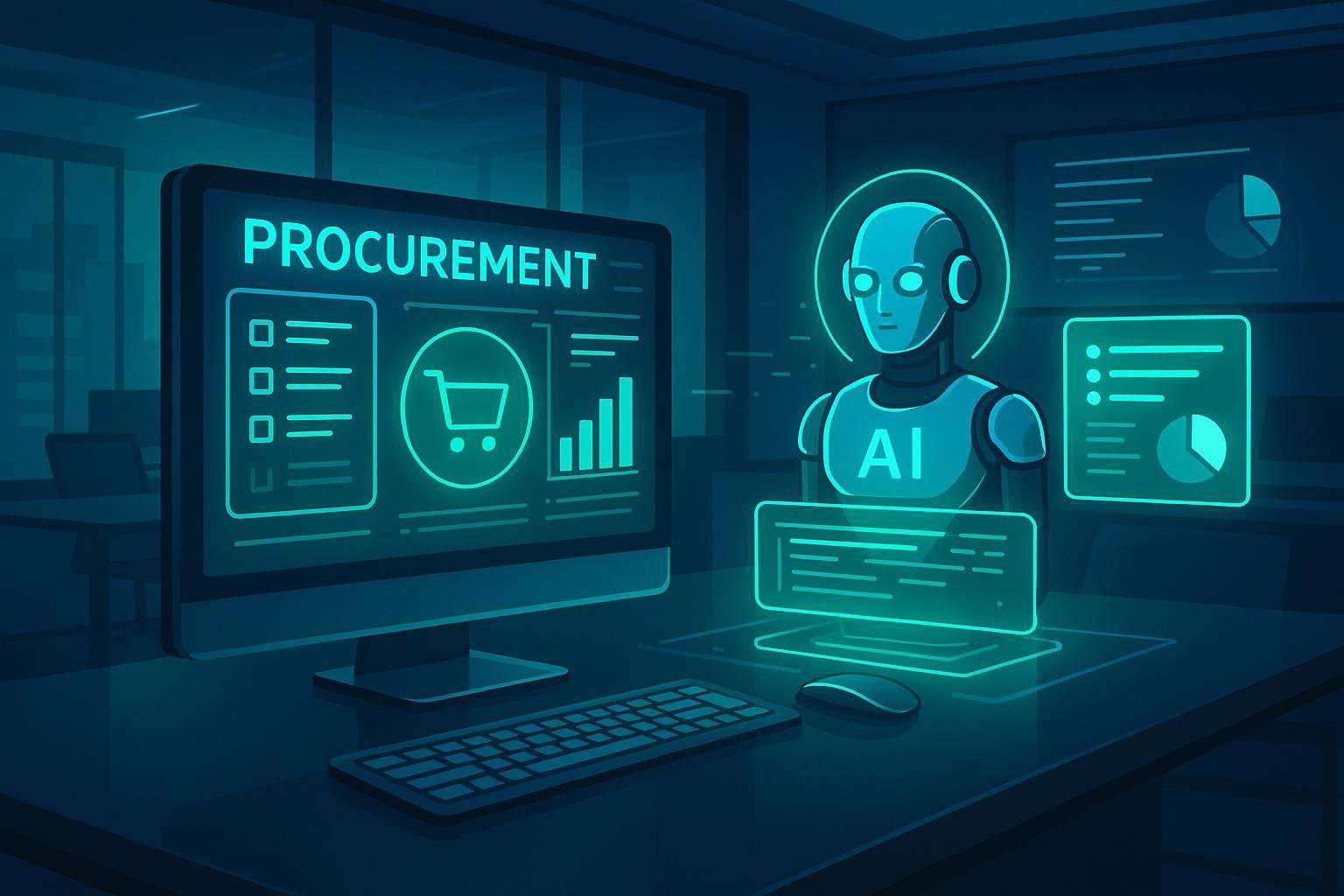
Artificial intelligence is rapidly reshaping procurement, with the emergence of agentic AI marking a significant leap beyond traditional generative models. Unlike reactive generative AI, which depends on human prompts to produce content or provide answers, agentic AI operates proactively, autonomously reasoning, planning, and executing complex workflows with minimal human oversight. This transformation positions agentic AI as a critical enabler for procurement functions striving to en...
Continue Reading This Article
Enjoy this article as well as all of our content, including reports, news, tips and more.
By registering or signing into your SRM Today account, you agree to SRM Today's Terms of Use and consent to the processing of your personal information as described in our Privacy Policy.
hance efficiency, resilience, and strategic value in an increasingly complex global environment.
Procurement leaders today grapple with mounting pressures to extract greater value across wider operational areas despite constrained resources. Agentic AI presents a compelling solution by automating time-consuming, tactical tasks traditionally handled by procurement teams. This automation frees personnel to concentrate on higher-level strategy, such as supplier innovation, risk mitigation, and sustainability initiatives. Industry analyses underscore that agentic systems can manage entire procurement cycles, from sourcing to contracting and supplier management, independently, accelerating decision-making while reducing manual workloads.
According to insights from McKinsey, procurement’s evolving landscape, with its geopolitical uncertainties, regulatory complexities, and overwhelming data flows, demands smarter, more agile approaches that move beyond transactional workflows. Agentic AI addresses these challenges by enabling proactive insights and seamless cross-system integrations that support dynamic planning and execution. Procurement leaders must therefore transform their operating models to fully harness agentic AI’s potential, positioning the function as a strategic driver for growth, sustainability, and organisational resilience.
Echoing this perspective, research and thought leadership published by procurement technology providers highlight the foundational distinction between conventional AI agents and agentic AI. While standard AI agents assist with discrete tasks, agentic AI independently sets objectives, formulates and adapts plans, and carries out processes end to end. This shift translates into procurement operations becoming more predictive and intelligent, capable of autonomously identifying supplier opportunities, undertaking negotiations, and foreseeing risks before they materialise.
Forecasts and industry roadmaps suggest that by 2026, agentic AI will transition from an emerging technology to an indispensable tool embedded in procurement strategies. Procurement functions leveraging agentic AI are expected to outpace competitors in agility and innovation, shifting from reactive operations to proactive value creation. This evolution is supported by expanding investments in education and capability-building; for example, academic institutions such as the University of Texas at Austin’s McCombs School of Business are introducing specialist courses designed to equip procurement professionals with the skills needed to integrate agentic AI into strategic sourcing and supply chain management.
Implementing agentic AI also promises to transform procurement’s data landscape, enabling the management and analysis of vast real-time datasets with enhanced precision, as noted by technology firms like IBM. This capability is critical in today’s volatile supply chains where rapid response to disruptions and nuanced supplier insights can spell the difference between success and failure. By automating complex decision-making processes, agentic AI positions procurement as a competitive advantage, moving beyond operational efficiency toward driving innovation and long-term resilience.
In conclusion, while procurement teams have begun exploring AI’s possibilities, the emergence of agentic AI represents a strategic inflection point. Organisations that embrace these technologies stand to unlock unprecedented value by delegating routine workflows to intelligent agents, fostering a shift from labour-intensive operations to strategic leadership. The procurement function’s agentic future promises not just incremental improvements, but a fundamental reinvention of how value is generated and sustained in global supply chains.
Source: Noah Wire Services