


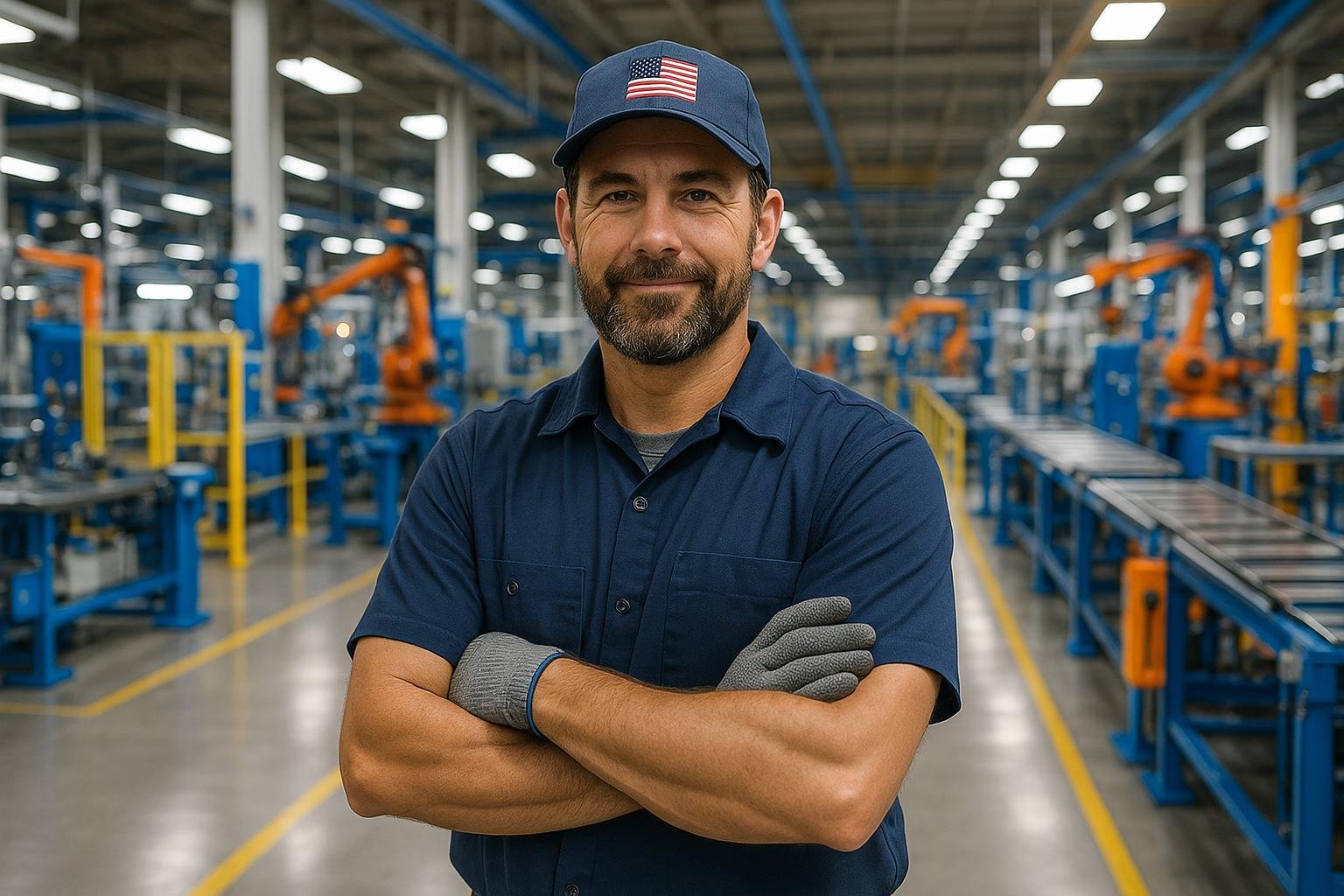
AbbVie pledges a decade-long $100 billion investment in US manufacturing and price reductions, as part of a broader industry shift driven by new trade agreements and federal policies aimed at boosting domestic capacity and reducing reliance on imports.

AbbVie has agreed to invest US$100 billion in the United States over the next decade as part of a voluntary deal with the Trump administration that ties lower domestic drug prices to a major reshoring push, the company an...
Continue Reading This Article
Enjoy this article as well as all of our content, including reports, news, tips and more.
By registering or signing into your SRM Today account, you agree to SRM Today's Terms of Use and consent to the processing of your personal information as described in our Privacy Policy.
The AbbVie announcement marks the latest and largest pledge in a rapidly evolving policy drive that began with a White House threat to levy 100% tariffs on branded patented drugs unless firms established U.S. manufacturing capacity, a measure described by CNBC in September 2025. Industry sources and analysts say the carrot-and-stick approach has converted a policy threat into an operational imperative for many large drugmakers, with 16 of 17 firms identified by the administration now participating in framework agreements; only Regeneron remains outside, according to reporting compiled from multiple industry notices.
This round of deals is explicit in making domestic capacity expansion a condition of commercial certainty. The company’s US$100 billion commitment encompasses research and development as well as capital spending on manufacturing over ten years, the PR Newswire statement says. Executives and sector commentators note that the scale and multi-year nature of such programmes reflect a strategic shift: geographic control of supply chains is being treated as a risk-mitigation asset rather than a discretionary cost.
AbbVie’s pact follows comparable arrangements by other major manufacturers. Industry reporting and company disclosures show Johnson & Johnson committed US$55 billion of U.S. investment through 2029, including new cell-therapy and drug-product facilities, and several manufacturers, including Amgen, Bristol Myers Squibb, Pfizer, Eli Lilly and Novo Nordisk, have entered similar agreements that pair tariff exemptions with price concessions. Separate coverage by the Associated Press and trade outlets detailed a group of nine companies that earlier agreed to align Medicaid prices with prices in other developed markets and to implement most-favoured-nation approaches for new drugs, trading those price concessions for temporary duty-free access and a three-year regulatory reprieve.
The administration frames the package as an effort to neutralise what it calls “global freeloading,” by aligning U.S. prices more closely with international benchmarks and reducing political risk for manufacturers. Reporting from DCAT and European Biotechnology indicates some deals envisage discounts of up to 90% delivered through TrumpRx and direct-to-patient channels for selected high-volume medicines, while company statements emphasise greater supply-chain resilience and expanded domestic manufacturing capabilities.
Despite the headline commitments, converting capital pledges into commercially available capacity will take time. Regulatory filings and industry data show that building, validating and commissioning pharmaceutical manufacturing lines, especially for biologics and complex therapies, requires extended engineering, quality assurance and inspection cycles. That lag means some new capacity may not come online until after the three-year tariff and pricing window has closed, leaving execution pacing and supplier readiness as critical constraints.
The trade-off for manufacturers is clear: accept short-term pricing concessions and expanded domestic spending to secure multi-year tariff relief and regulatory clarity, or face potentially punitive trade measures that could materially affect imported product economics. For policy makers, the strategy aims to bind long-cycle industrial investment to near-term market concessions, leveraging tariff policy to accelerate onshore production at a scale rarely seen in recent decades.
Observers caution that the details of discounts and facility siting remain largely confidential, and that many projects will lock companies into domestic footprints that extend beyond any single administration. Industry analysts say success will hinge on early alignment across engineering, regulatory affairs and supplier networks to shorten validation timelines; firms that achieve that coordination will be best placed to translate commitments into sustained supply continuity.
The AbbVie deal adds momentum to an industry-wide realignment in which trade policy, drug pricing and supply-chain strategy are being negotiated as a single package rather than separate domains. Whether the investments ultimately reduce patient costs, improve resilience or simply reallocate production geography will depend on how swiftly companies move from signed pledges to validated, operational plants and on the transparency of pricing outcomes as the programmes roll out.
Source: Noah Wire Services
Subscribe to Industry Updates

